


 Jul 20,2026
Every maintenance engineer knows the sinking feeling. You run a thermal scan on a low-voltage distribution cabinet and spot a hot spot glowing angry orange on the screen—right at a bolted joint where busbars meet a moving component. The temperature reading is 40°C above ambient, and rising. You schedule an emergency shutdown, pull the assembly apart, and find the same old story: pitting, discoloration, and a dull grayish layer where the current should be flowing smoothly. No arc flash, no catastrophic failure this time, but your weekend is gone, and the root cause still hasn’t been addressed.
If this sounds familiar, you are dealing with a classic case of high-resistance heating at separable current-carrying interfaces—a problem that gets worse with age, load cycling, and humidity. The good news is that the solution is not necessarily a complete redesign of your power distribution setup. Often, the fix is a material upgrade at the very surface where current transfers from one conductor to another.
The Silent Enemy: Oxidation and Fretting
To understand why these joints overheat, we need to look past the obvious “loose bolt” excuse. Even when properly torqued to manufacturer specifications, a flat metal-to-metal interface is never perfectly smooth. At the microscopic level, current flows only through scattered high points called asperities. The actual conductive area might be a tiny fraction of the apparent contact surface. When air and moisture penetrate the joint, copper surfaces oxidize. Copper oxide is a semiconductor—its resistivity is orders of magnitude higher than pure copper. The same is true for aluminum, which forms a tenacious oxide film almost instantly when exposed to air.
Add in thermal expansion and contraction from daily load cycles, plus micro-movements caused by mechanical vibration or magnetic forces (fretting), and you have a destructive recipe. Fretting grinds away the base metal, continually exposing fresh surfaces to oxidation while also producing wear debris that further constricts the current path. Resistance creeps up, I²R losses generate more heat, and oxidation accelerates in a self-reinforcing loop. According to IEEE Std C37.20.3, temperature rise limits for silver-surfaced or tin-surfaced connections are strictly defined—exceeding them degrades insulation life and can lead to catastrophic failure.
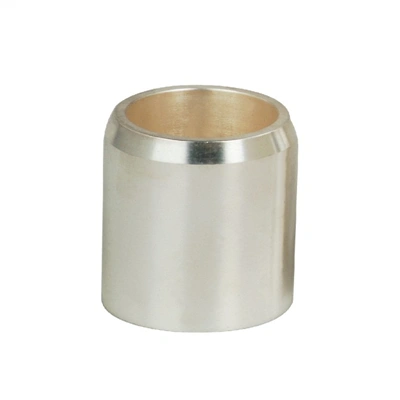
Why Silver Plating Changes the Game
Here is where material science offers an elegant answer. Silver is the most electrically conductive metal on the periodic table, but its real superpower in connection technology is not just conductivity. It is the nature of its oxide. Silver oxide (Ag₂O) is thermally unstable above around 200°C and, crucially, it remains electrically conductive at normal operating temperatures. Unlike copper oxides that act as insulators, a silver oxide layer does not block current flow. Moreover, silver tarnish (silver sulfide) that forms in sulfur-rich industrial atmospheres is also conductive and mechanically soft—it breaks down easily under contact pressure, allowing fresh silver-to-silver micro-welds to form.
This is why many electrical equipment manufacturers have moved toward applying a silver layer—often 5 to 20 microns thick—via electroplating onto copper or copper-alloy substrates. The electroplated silver coating for power connectors creates a surface that resists oxidation, maintains low contact resistance over decades, and handles high current densities without the thermal runaway that plagues bare copper or tin-plated parts in critical applications.
A case from a European panel builder underscores the point. In a seawater desalination plant, high-humidity and saline air caused standard tin-plated connections to deteriorate within 18 months. After switching to silver-plated components for all primary joints, the facility reported a 75% reduction in unscheduled maintenance over a three-year period, with thermal imaging consistently showing joint temperatures within specification. The upfront cost difference was recovered in the first avoided downtime event.
Not All Silver Platings Are Equal
It would be convenient if we could just specify “silver-plated” and walk away. But the plating process, thickness, underplate materials, and quality control all matter enormously. A thin, porous silver layer over copper without a proper nickel underplate can actually worsen corrosion by creating a galvanic cell where the underlying copper sacrifices itself through pinholes. Hard silver plating, often alloyed with trace amounts of antimony or other elements, provides better wear resistance for components that experience mechanical sliding or repeated mating cycles. Soft, pure silver delivers maximum conductivity but can be prone to cold welding in stationary joints—an effect that, surprisingly, can be beneficial if designed correctly, as it seals the interface against gas ingress.
Field experience shows that the most robust solution for bolted joints and disconnectable interfaces often involves a copper base material, a nickel diffusion barrier of 2–5 microns, and a silver top layer of 10–15 microns. This stack-up is outlined in industrial standards such as IEC 62271-1 for high-voltage switchgear, which specifies temperature rise tests and long-term thermal stability requirements for silver-surfaced connections. If you are troubleshooting recurring hot spots, requesting a detailed plating specification from your supplier is a tangible step you can take before changing your entire equipment layout.
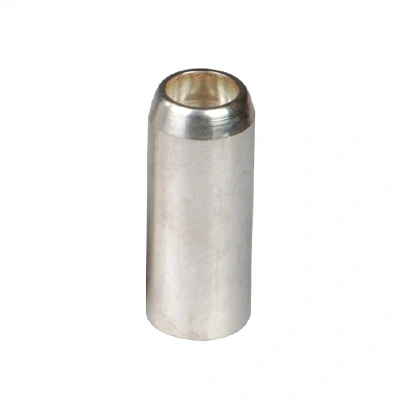
A Practical Guide to Diagnosing and Fixing Overheating Joints
Let’s get into hands-on territory. If you have a problematic joint that regularly trips thermal alarms, here is a systematic approach you can use before calling in a specialist.
Step 1: Quantify the Problem
Use a calibrated infrared camera or permanently installed temperature sensors to log the temperature difference (ΔT) between the suspect joint and the ambient busbar temperature, at stable load and during peak load. Record the load current simultaneously. A healthy silver-plated bolted joint typically shows less than 45°C rise at rated current, per IEEE guidelines. If you are seeing 65°C or higher, you are in the danger zone.
Step 2: Isolate the Root Cause
After a safe shutdown and lockout, disassemble the joint. Look for pitting, discoloration, fretting dust (black powder around the interface), and evidence of arcing. Pay attention to the bolt torque: is it within the manufacturer’s range? If the surface is dull gray with a hard, scale-like layer on copper, oxidation is your primary culprit. If the surface is eroded with grooves, fretting is dominant. Sometimes you will find both.
Step 3: Remediation, Not Just Cleaning
Simply abrading the surface with emery cloth and retightening is a short-term fix that often makes things worse by removing any remaining protective plating and creating a rougher surface with fewer contact points. If the component is a removable part, like a disconnectable link or a draw-out mechanism finger cluster, consider replacing it with a version that has the proper silver plating profile. Silver plating for high current interfaces is not a luxury; it is an engineering necessity when downtime costs more than components.
If replacement is not immediately feasible, you can apply silver-plating repair kits (brush plating) on-site for stationary bolted joints, following strict surface preparation procedures. However, this requires skill and should not be attempted without training—uneven plating thickness can lead to new hot spots.
Step 4: Verify and Monitor
After reassembly with proper torque (use a calibrated torque wrench and follow the bolt sequence if it’s a multi-bolt joint), perform a contact resistance test using a micro-ohmmeter at low current (10–100 A, as per NETA standards). Compare readings to baseline values or manufacturer specifications. Values in the single-digit micro-ohm range are typical for a well-designed silver-plated bolted joint. Then, under load, re-scan with thermography to confirm the fix.
Prevention: What to Look for in New Equipment and Spares
When you are evaluating new switchgear or ordering spare parts for critical pathways, the specification of the current transfer surfaces should be as important as the interrupting rating or the enclosure type. Ask for the plating material, thickness, and test reports. Independent test data—such as temperature rise type-test reports performed at accredited labs like KEMA or UL—can provide assurance beyond marketing claims.
If you hope to achieve more professional reliability and streamlined sourcing, you may want to explore Fuyi’s approach to engineered connection solutions. Their catalog includes precision silver-plated components designed for bolt-in and draw-out applications, with documented plating thickness and nickel barrier layers verified through X-ray fluorescence (XRF) testing.
The Cost of Ignoring the Surface
There is a tendency to treat connection points as simple mechanical accessories—just lumps of copper that happen to carry current. But when a single hot spot in a 2000A feeder can waste over 100 watts of power continuously, the energy cost alone adds up to thousands of dollars over the equipment life. Factor in the insulation degradation of adjacent cables, the increased air-conditioning load in the electrical room, and the risk of an unplanned outage during peak production, and the economic case for a surface material upgrade becomes indisputable.
The next time you are walking through your facility and catch that familiar warm smell of overheated insulation near a cabinet, remember: the problem is often just a few microns thick. The solution can be just as thin—but infinitely more conductive.
When reliability requirements leave no room for compromise, it’s worth assessing whether your current supplier meets the necessary standards for surface engineering. Fuyi provides application-specific silver-plated interface solutions with full traceability and test documentation, helping you reduce long-term maintenance overhead and improve system uptime.


-Temperature-Controller-1.webp)