

 Aug 17,2026
When you're managing a medium-voltage switchgear project, every week of delay adds cost and risk. Custom components—whether insulation parts, current transformers, or protection devices—often become the critical path. The good news is that lead time on custom MV switchgear components can be reduced through a combination of design preparation, supplier selection, and process optimization. This article outlines five practical approaches to shorten delivery timelines without compromising quality or compliance.
1. Start with Complete and Clear Technical Documentation
The single biggest cause of extended lead times is the back-and-forth required to clarify specifications. Every round of questions from the manufacturer to clarify ratings, dimensions, or material requirements adds days or even weeks to the overall timeline.
For custom MV switchgear components, the following information should be prepared before contacting a supplier:
-
Rated voltage and system frequency – e.g., 10kV, 24kV, or 35kV systems
-
Mounting dimensions – hole spacing, total height, and interface requirements
-
Creepage distance requirements – particularly important for insulation parts in high-pollution environments
-
Material specifications – epoxy resin formulations, copper conductivity grades, or EPDM compounds
-
OEM model references – if replacing existing components, providing the original model number speeds up cross-referencing
-
Accuracy class and ratio – for current and voltage transformers (e.g., 0.2S for metering, 5P10 for protection)
When drawings are submitted in standard CAD or PDF formats, manufacturers can begin engineering review immediately—often within 24 hours. This eliminates the specification clarification phase that typically consumes 3–5 days of the project timeline.
2. Choose a Supplier with In-House Engineering and Flexible Customization
Not all component suppliers are equipped to handle custom work efficiently. Suppliers that outsource design or tooling add layers of communication and coordination that extend lead times.
A supplier with in-house engineering capabilities can:
-
Conduct feasibility assessments directly
-
Recommend material optimizations without external consultation
-
Make design adjustments on the spot
Fuyi Switchgear, for example, offers full-cycle OEM/ODM services with an experienced engineering team that develops new products based on customer drawings or concepts. This means design review, material selection, and structural optimization happen within the same organization, reducing the handoff delays that occur when engineering is outsourced.
For extreme environment applications—such as high-temperature regions exceeding 50°C or coastal areas with salt spray—in-house engineering also enables rapid adaptation of material formulations without waiting for third-party validation.
-Condensation-&-Temperature-Controlle2-817.webp)
3. Optimize the Prototype and Sampling Phase
The sampling phase is often where timelines stretch unexpectedly. A clear understanding of sample lead times and approval processes helps project managers set realistic expectations and avoid last-minute surprises.
For custom MV switchgear components, typical sampling timelines are:
-
First sample delivery: 7–15 days after drawing approval
-
Customer approval: depends on internal testing and sign-off procedures
-
Production ramp-up: begins immediately after sample approval
To cut time in this phase:
-
Approve samples promptly – delays in customer-side approval directly push back mass production
-
Request samples that are production-representative – samples should use the same materials and processes as mass production to avoid re-qualification later
-
Consider skipping samples for minor variations – for components that are modifications of existing designs, some suppliers can move directly to production with engineering sign-off
The key is to treat the sampling phase not as a formality but as the final technical verification before production scaling.
4. Plan for Testing and Quality Assurance Early
Testing is non-negotiable for MV switchgear components—but it doesn't have to be a bottleneck. The key is understanding what tests are required and ensuring they are integrated into the production schedule rather than treated as an afterthought.
For MV components, typical factory tests include:
-
Partial discharge (PD) testing – for insulation parts, PD levels below 10pC indicate void-free construction
-
Power frequency withstand voltage testing – verifies insulation integrity under overvoltage conditions
-
Accuracy testing – for current and voltage transformers, ensuring metering class compliance
-
Resistance and fuse element integrity inspection – for medium-voltage fuses
-
Hardness, plating thickness, and conductivity testing – for switchgear contacts
Suppliers that perform 100% factory testing on every unit can provide test reports with each shipment, eliminating the need for costly third-party re-testing at the receiving end. This saves not just time but also reduces the risk of installation delays caused by failed on-site tests.
5. Leverage Stable Supply Chains and Inventory Planning
The final piece of the lead time puzzle is supply chain reliability. Even with fast production, shipping delays or material shortages can derail a project schedule.
Consider these factors when evaluating a supplier's ability to deliver on time:
-
Raw material inventory – suppliers that maintain stock of common materials (epoxy resins, copper, silicone rubber) can start production immediately upon order confirmation
-
Production scheduling flexibility – some manufacturers can accommodate urgent orders by adjusting production priorities
-
Shipping and logistics – suppliers with established export processes and multiple shipping options can reduce transit time
A stable supply chain also means predictable lead times. Standard delivery for MV switchgear components typically ranges from 15–25 days, with urgent orders supported when necessary. Knowing these benchmarks helps project managers plan procurement activities with greater confidence.
Checklist: Steps to Reduce Custom MV Switchgear Component Lead Time
| Step | Action | Owner |
|---|---|---|
| 1 | Prepare complete drawings (CAD/PDF) with all technical parameters | Buyer/Engineer |
| 2 | Submit specifications to supplier with clear rated voltage, creepage, and accuracy requirements | Buyer |
| 3 | Confirm engineering review and material recommendations within 24–48 hours | Supplier |
| 4 | Approve sample drawings and proceed to prototype | Buyer |
| 5 | Complete sample testing and approval within agreed timeframe | Buyer/Supplier |
| 6 | Confirm mass production schedule and testing plan | Supplier |
| 7 | Arrange shipping and logistics in advance | Buyer/Supplier |
FAQ
Q1: What is the typical lead time for custom MV switchgear components?
Typical lead times range from 15 to 25 days for standard custom orders. More complex designs or large quantities may require 20–40 days. Actual delivery depends on design complexity, material availability, and quantity.
Q2: Can I get samples before placing a mass production order?
Yes. Most OEM suppliers offer prototype sampling with first samples available in 7–15 days after drawing approval. Customer approval is required before mass production begins.
Q3: Does custom branding or labeling add to the lead time?
Custom branding (nameplates, labeling, packaging) typically adds minimal time if specified upfront. Suppliers that offer custom branding as part of their standard OEM services can usually accommodate this without extending the production schedule.
Q4: What information do I need to provide for a custom insulation part?
Rated voltage, indoor/outdoor designation, mounting hole distance, total height, creepage distance, material preference, and any available OEM model reference.
Q5: How do I verify that a supplier can meet my delivery deadline?
Request a clear production schedule with milestone dates (drawing review, sample delivery, mass production start, testing completion, and shipping). Suppliers that provide transparent timelines and have 100% factory testing in-house are generally more reliable for on-time delivery.
Conclusion
Reducing lead time on custom MV switchgear components comes down to five areas: clear documentation, in-house engineering capability, efficient sampling, integrated testing, and supply chain stability. The most important step is starting the conversation with complete technical information—this alone can save several days of back-and-forth.
Avoid the common mistake of treating lead time as something that only the supplier controls. Project managers who prepare thoroughly, approve samples quickly, and plan logistics in advance consistently achieve faster delivery than those who leave these details to the last minute.
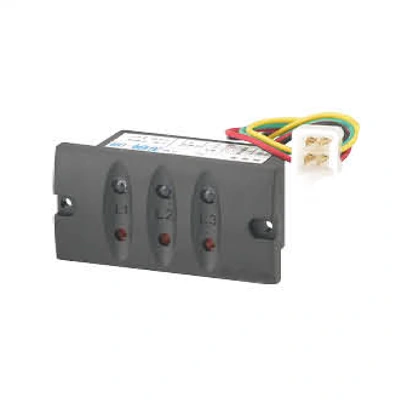
If you're planning a project and need to confirm technical specifications or discuss delivery timelines, review the available switchgear protection and detection devices or contact our engineering team for a feasibility assessment.


-Temperature-Controller-1.webp)