

 Aug 24,2026
The service life of medium and high-voltage switchgear depends heavily on the performance and durability of its contact systems. Contact wear, increased resistance, and mechanical failure are among the most common reasons for premature switchgear retirement or unplanned downtime. Silver‑plated tulip contacts combined with precision machining provide a practical and proven approach to extending switchgear service life — by minimizing contact resistance, reducing wear rates, and maintaining stable electrical performance over thousands of operation cycles. This article explains how these two factors work together, what to look for when selecting contacts, and how proper maintenance can further maximize lifespan.
Understanding the Role of Tulip Contacts in Switchgear
Tulip contacts — also known as tulip-type contacts or finger contacts — are a common design used in medium and high-voltage switchgear, particularly in vacuum circuit breakers and withdrawable assemblies. The name comes from the petal-like arrangement of multiple contact fingers that form a tulip-shaped receptacle. When a mating contact (such as a contact arm or circuit breaker pole) is inserted, the fingers flex outward and apply uniform radial pressure to ensure a secure electrical connection.
This multi-finger design offers several advantages over single-point contacts:
-
Redundant contact points distribute current across multiple paths, reducing localized heating.
-
Spring action from the fingers maintains contact pressure even after repeated operations.
-
Self-cleaning action during insertion and withdrawal helps remove surface oxidation or contamination.
However, the very features that make tulip contacts effective also create potential failure modes. The fingers are subject to mechanical stress from repeated insertion cycles. The contact surfaces experience electrical erosion from arcing during switching operations. And over time, oxidation and contamination can increase contact resistance — leading to heating, further oxidation, and eventual failure.
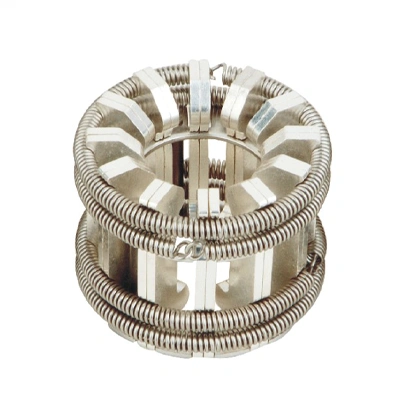
Why Silver Plating Matters for Contact Longevity
Silver plating is the industry standard for high-performance switchgear contacts, and for good reason. Silver offers the highest electrical conductivity of any metal (63 × 10⁶ S/m at 20°C), significantly higher than copper (59 × 10⁶ S/m) or gold (45 × 10⁶ S/m). This translates directly to lower contact resistance — which means less heat generation at the contact interface.
When a switchgear contact operates, the actual metal-to-metal contact occurs only at microscopic asperities on the surface. The real contact area is a tiny fraction of the apparent contact area. Contact resistance is determined by:
-
Constriction resistance — current flowing through these microscopic contact spots
-
Film resistance — surface layers of oxide, sulfide, or contamination
Silver plating addresses both factors. The high conductivity of silver reduces constriction resistance. More importantly, silver oxides are themselves conductive (unlike copper oxides, which are insulating). Even if the silver surface oxidizes, the oxide layer does not significantly increase contact resistance — a critical advantage for long-term reliability.
FUYI's switchgear contacts are manufactured with high-conductivity copper base material and a silver-plated surface finish. The plating process is carefully controlled to ensure consistent thickness and adhesion, with 100% factory testing for hardness, plating thickness, and conductivity.
The Effect of Silver Plating on Contact Lifespan
The lifespan of a silver-plated contact is influenced by several factors:
| Factor | Impact on Lifespan | Mitigation |
|---|---|---|
| Plating thickness | Thicker plating provides more wear margin but must be balanced against dimensional tolerances | Specified based on expected operation cycle count |
| Adhesion quality | Poor adhesion leads to flaking and exposure of base copper | Proper surface preparation and plating process control |
| Surface finish | Smoother surfaces reduce wear and provide more consistent contact resistance | Precision machining to specified surface roughness |
| Operating environment | Humidity, pollution, and temperature affect oxidation and wear rates | Suitable enclosure design and maintenance practices |
Silver plating does not make contacts immune to wear. Each insertion and withdrawal cycle causes mechanical abrasion. Each switching operation causes some degree of arc erosion. However, proper silver plating — with adequate thickness, good adhesion, and smooth finish — significantly extends the number of cycles a contact can withstand before reaching end-of-life criteria (such as excessive contact resistance or visible wear).
How Precision Machining Contributes to Contact Durability
Precision machining is the second critical factor in extending switchgear contact life. While silver plating provides the surface properties needed for low-resistance, low-wear operation, precision machining ensures that the contact geometry is accurate and consistent.
Key aspects of precision machining for tulip contacts include:
Dimensional Accuracy
The contact fingers must be machined to precise dimensions so that each finger makes consistent contact pressure when mated. Variations in finger dimensions lead to uneven pressure distribution — some fingers carry more current than others, causing localized heating and accelerated wear. FUYI's switchgear contacts are precision machined to ensure smooth engagement and consistent performance.
Surface Finish
The surface finish of the contact affects both contact resistance and wear rate. Rougher surfaces have higher initial contact resistance due to reduced real contact area. They also wear faster because asperities are more easily deformed or broken off during insertion cycles. Precision machining achieves the surface finish required for optimal contact performance.
Geometric Consistency
Tulip contacts must maintain their geometric shape over thousands of operations. The fingers are designed to flex within elastic limits during each insertion cycle. Precision machining ensures that the stress distribution across each finger is uniform — reducing the risk of stress concentration that could lead to premature fatigue failure.
Interchangeability
Precision machining also enables interchangeability with major OEM brands. FUYI's contacts are designed to be interchangeable with ABB, Siemens, and other leading switchgear manufacturers. This means replacement contacts can be installed without modifying the existing switchgear — a significant advantage for maintenance and retrofit projects.
The Combined Effect: Silver Plating + Precision Machining
Silver plating and precision machining work together to extend contact life in ways that neither can achieve alone:
-
Precision machining creates the accurate geometry needed for uniform pressure distribution and smooth engagement.
-
Silver plating provides the low-resistance, low-wear surface that maintains performance over time.
-
Together, they minimize the two primary failure mechanisms: contact resistance increase (addressed by silver plating) and mechanical wear (addressed by both precision geometry and surface finish).
The result is a contact system that maintains stable contact resistance over more operations, generates less heat during normal operation, and requires less frequent replacement.
Selecting Tulip Contacts for Different Current Ratings
The selection of tulip contacts should consider the system's current rating, as higher currents impose stricter requirements on contact design.
For 1250A systems, standard-specification tulip contacts are typically sufficient. These designs meet the thermal and electrical requirements of mid-range power distribution applications.
For 2500A systems and above, the contact design must accommodate significantly higher current loads. FUYI recommends tulip contacts with a higher number of contact fingers — for example, 30 segments or more — to increase the total contact area and improve heat dissipation. These are often paired with thickened contact arms or dual-arm designs to increase the cross-sectional area.
When selecting contacts, the following factors should be evaluated:
-
Rated current — determines the required contact area and finger count
-
Operation cycle count — affects plating thickness requirements
-
Environmental conditions — humidity, pollution, and temperature influence oxidation rates
-
Mating component specifications — ensures proper fit and pressure
Maintenance Practices That Extend Contact Life
Even with high-quality silver-plated and precision-machined contacts, proper maintenance is essential for maximizing service life. Key maintenance practices include:
Visual Inspection
Regular inspection of contact surfaces for signs of wear, discoloration, or damage. Silver plating that shows significant wear (exposing copper base material) indicates that replacement may be needed.
Contact Resistance Measurement
Periodic measurement of contact resistance can detect increases that indicate surface degradation or loss of contact pressure. Trending resistance values over time provides early warning of developing issues.
Cleaning
Contamination on contact surfaces increases resistance and accelerates wear. Cleaning should be performed using methods that do not damage the silver plating — typically using approved solvents and non-abrasive materials.
Lubrication
Some switchgear designs specify the use of contact lubricants to reduce wear and inhibit oxidation. The correct lubricant should be applied according to the manufacturer's specifications.
Operation Count Tracking
Tracking the number of operations (insertion/withdrawal cycles and switching operations) helps predict when contacts are approaching their design life and should be replaced proactively.
Common Questions About Switchgear Contact Lifespan
Q: How many operations can silver-plated tulip contacts typically withstand?
A: The number of operations depends on the specific design, plating thickness, current rating, and operating conditions. Manufacturers typically specify a mechanical endurance rating (e.g., 10,000 or 20,000 operations) under defined conditions. Actual service life may vary based on application factors.
Q: What are the signs that switchgear contacts need replacement?
A: Key indicators include: visible wear of the silver plating exposing copper base material; contact resistance measurements exceeding acceptable limits; discoloration or pitting from arcing; uneven finger pressure; and increased temperature rise during normal operation.
Q: Can silver-plated contacts be re-plated, or must they be replaced?
A: Re-plating is technically possible but rarely practical for tulip contacts. The precision dimensions of the contact fingers must be maintained, and re-plating can affect tolerances. In most cases, replacement with new contacts is the recommended approach.
Q: How does silver plating compare to gold plating for switchgear contacts?
A: Silver offers higher conductivity than gold and is the preferred choice for high-current switchgear applications. Gold is sometimes used for low-current, low-voltage signal contacts where oxidation resistance is critical, but for power contacts, silver provides superior performance at lower cost.
Q: Does silver plating require special handling or storage?
A: Silver surfaces can tarnish over time when exposed to sulfur-containing environments, but silver tarnish (silver sulfide) is conductive and does not significantly increase contact resistance. However, contacts should be stored in clean, dry conditions and handled with clean gloves to prevent contamination.
Q: Are FUYI's switchgear contacts compatible with ABB or Siemens switchgear?
A: Yes, FUYI's switchgear contacts are designed to be interchangeable with major OEM brands including ABB and Siemens. However, it is always recommended to verify specific model compatibility before ordering.
Conclusion
Extending the service life of medium and high-voltage switchgear starts with the contact system — the component that experiences the most mechanical and electrical stress over the equipment's lifetime. Silver-plated tulip contacts, manufactured with precision machining, provide a proven combination of low contact resistance, mechanical durability, and consistent performance over thousands of operation cycles.
When selecting replacement contacts or specifying new switchgear, consider not only the current rating and compatibility requirements but also the quality of the silver plating and the precision of the machining. These factors directly affect how long the contacts will last and how reliably the switchgear will perform.
For applications requiring high current capacity (2500A and above), consider tulip contacts with increased finger counts and reinforced contact arm designs. For standard applications, properly specified silver-plated contacts with precision-machined geometry will provide reliable service over the switchgear's expected lifetime.
Review the available switchgear contact configurations and technical specifications to find the right solution for your application. For projects with specific current ratings or compatibility requirements, technical confirmation with the supplier is recommended before ordering.


-Temperature-Controller-1.webp)