

 Jul 13,2026
Last Tuesday, a 12 kV switchgear panel at a water treatment plant tripped without warning. The operators found carbonized insulation on the busbar compartment and a blown VT – the classic signature of a transient overvoltage event no one saw coming. The plant lost six hours of pumping and faced a five-figure repair bill. The culprit wasn’t a direct lightning strike, but a switching surge on the utility side that found the cabinet’s insulation the weakest link.
If you run a medium voltage installation, you probably have a checklist: breakers, relays, CTs, VTs. But how much attention goes to overvoltage protection that sits between the line and everything else you’ve invested in? It’s the component that’s meant to be invisible when things are normal, yet it decides whether your switchgear survives the abnormal. The right surge protective devices for medium voltage systems do not just meet code – they shape the life expectancy of your switchgear.
Why Your Switchgear Sees Overvoltages – Even on a Clear Day
There’s a persistent myth that overvoltages are mostly a lightning problem. The data says otherwise. While a nearby strike can induce a massive surge, the everyday killers are switching operations: capacitor bank energization, motor starting, or even a fault clearance upstream. According to IEC 60071-2, switching overvoltages in medium voltage systems can reach 3 to 4 per unit, enough to degrade insulation progressively over months.
Inside a metal-clad switchgear cabinet, the tight spaces and cable connections create multiple reflection points. A steep-fronted wave can double in amplitude at an open disconnect or a transformer winding within microseconds. This is exactly the kind of scenario where standard arrester selection charts can mislead you if you ignore the lead length and the actual protective distance.
One commissioning engineer once told me, “I’ve never seen an arrester fail that was sized correctly for continuous operating voltage, but I’ve seen dozens of VTs and bus supports fail because the arrester was placed at the cable entrance and not close enough to the equipment being protected.” That’s field experience worth remembering.
Selection Parameters That Actually Matter
The process is specified in IEC 60099-4, but experienced engineers look at three practical points that the datasheets only hint at.
1. Continuous Operating Voltage (Uc) is your true baseline
If the system voltage has a 10% sustained overvoltage during load rejection, your protective device must handle it thermally. Picking a device with Uc just above the nominal line-to-ground voltage is a common mistake that results in thermal runaway during a harmless voltage swell. The safe practice is to select Uc at least 5% above the highest expected continuous voltage.
2. Nominal discharge current is about location, not size
In a medium voltage cabinet, the majority of surges are of the switching type, not the 10 kA lightning impulse. For cable-fed switchgear sections, an 8/20 µs nominal discharge current of 5 kA is usually sufficient if the upstream cable provides natural impedance. But directly exposed overhead line entries demand a higher rating. This is where many specifiers over-spec the current rating and under-spec the energy absorption, which leads to a bulkier device that still fails on long-duration switching surges.
3. Protective distance is everything
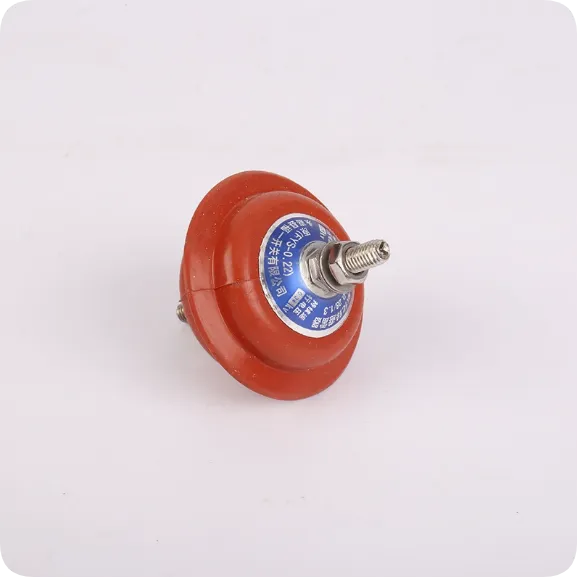
A device installed 2 meters away from a transformer, connected with twisted leads, actually protects a point 4 meters away electrically, due to the lead inductance. The resulting voltage at the transformer terminals is the device’s residual voltage plus the inductive voltage drop along the leads. This can easily add 15% to the clamping voltage. The solution is simple but often ignored: mount the surge protective device as close as possible to the equipment to be protected, directly to the busbar if feasible. Find device configurations that minimize protective distance in real installations.
Testing and Maintenance: The Three-Year Rule
When a transient overvoltage protective device operates, it doesn’t send a report. There’s no flag, no alarm, no SCADA event. The energy absorption silently ages the metal oxide varistor discs. That’s why the interval for preventative testing is critical.
The IEEE C62.11 standard recommends that station-class arresters be tested at least every three years. For medium voltage cabinets in an industrial setting, an annual insulation resistance check combined with a reference voltage measurement gives you a trend line. A drop of more than 5% in the 1 mA reference voltage usually indicates deterioration, even if the device has not reached end of life. This is practical advice you can implement with a standard 5 kV insulation tester and a microammeter, without sending anything to a lab.
One technician in a steel mill shared their rule of thumb: “If the cabinet is opened for any other maintenance, take five minutes to measure the arrester’s insulation resistance and record it. The trend matters more than the absolute value.” That’s an experiential gem that aligns perfectly with the reliability-centered maintenance philosophy.
Soft Wrap: Getting to a Installation That Lasts
Swapping out a failed surge protective device is easy. Designing a coordinated protection scheme that extends the life of your switchgear assets is a discipline that blends standards knowledge with installation awareness. The difference is in the details: how the device is mounted, what its leads look like, and whether the continuous voltage stresses have been realistically assessed.
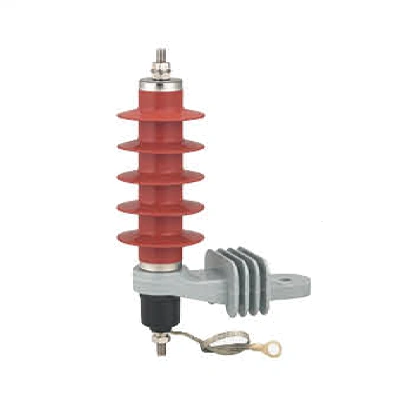
This is where partnering with a supplier that has a track record in medium voltage switchgear protection pays off. Fuyi’s range of switchgear overvoltage protection solutions is built around real-world cabinet dimensions, standard busbar interfaces, and the energy demands of industrial networks, not just abstract laboratory ratings. If you’d rather work from a concrete switchgear configuration than a theoretical specification, you can explore Fuyi’s switchgear surge protection equipment to see options that fit standard cell dimensions and rating requirements.
And if your current maintenance plan still relies on a “run to failure” approach for surge protection, consider this: a single unplanned switchgear outage costs you lost production, testing time, and sometimes the price of a new cable. A proactive protection strategy, built around correctly selected and installed devices, is the kind of cost avoidance that’s easy to justify at the next budget review.
Disclaimer: This article provides general guidance and does not replace a professional insulation coordination study. Always follow local installation codes and manufacturer instructions.


-Temperature-Controller-1.webp)