

 Jun 10,2026
A single misapplied measurement device inside a medium voltage panel can distort protection coordination, ruin energy audit data, or even cause a breaker to fail during a fault. I’ve walked into substations where a beautifully engineered switchgear lineup was let down by a £60 wound-type unit that saturated at half the prospective fault current. The operations team only found out during a trip that didn’t happen.
If you are tasked with specifying or replacing these components, the process can feel like a narrow technical exercise. In reality, it’s a series of cascading decisions that connect primary plant behavior, secondary wiring practicalities, and the long-term evolution of the grid you’re connecting to. Before diving into clauses and curves, it helps to have a clear picture of what modern, application-tested solutions look like — you can explore Fuyi’s range of medium-voltage measurement and protection devices to see how pre-configured units address the challenges discussed below.
Step 1: Pin Down What the Secondary Devices Actually Need
Engineers often start with the primary rating — 630 A, 1250 A — and pick a ratio that matches. That’s only half the picture. The real driver is the burden: the total impedance the secondary circuit presents to the device, including the relay, the meter, and every metre of 2.5 mm² wiring in between.
For metering applications, especially where custody transfer or internal cost allocation is involved, you need a unit whose accuracy class holds from light load to full load. Class 0.2 or 0.5 according to IEC 61869 is common here. But accuracy alone isn’t enough — you also have to check whether the actual connected burden stays within 25% to 100% of the rated burden for that class. A Class 0.5 unit rated at 15 VA may drift out of spec if the circuit only draws 2 VA because you oversized it “just in case.” I’ve seen a factory’s internal billing metering challenged by an auditor because the PT burden was barely 18% of rating, and the phase angle error had doubled from the type-test value.
For protection, the conversation shifts to overcurrent relay input impedance, lead resistance during earth faults, and whether the unit can deliver enough voltage to drive a trip coil through a saturated core. That’s where the accuracy limit factor (ALF) or instrument security factor comes in. Selecting the right protection-oriented design means matching the knee-point voltage to the maximum symmetrical and asymmetrical fault currents the switchgear will ever see — including future grid strengthening.
Step 2: Match Accuracy Classes and Safety Factors to the Application
Once you know the burden, narrow the field by mapping each feeder’s function to the appropriate accuracy class and safety factor. The table below summarizes the most common pairings in medium voltage switchgear.
| Application | Typical IEC 61869 Class | Key Selection Parameter | Why It Matters |
| Tariff metering (utilities) | 0.2 or 0.2S | Rated burden range 25–100% | Revenue protection; regulator audits |
| Internal energy monitoring | 0.5 or 1.0 | Actual burden vs. rated burden | Avoids systematic under-reporting |
| Overcurrent & earth fault protection | 5P10, 5P20 or 10P10, 10P20 | Accuracy limit factor, knee-point voltage | Ensures relay sees true fault current without saturation |
| Differential or distance protection | Class PX (IEC) / Class X (UK) | Knee-point voltage, magnetizing current | Critical for zone stability during through-faults |
| Metering with harmonics | 0.5 or 1.0, extended frequency range | Rated frequency bandwidth | Avoids measurement collapse when THD exceeds 10% |
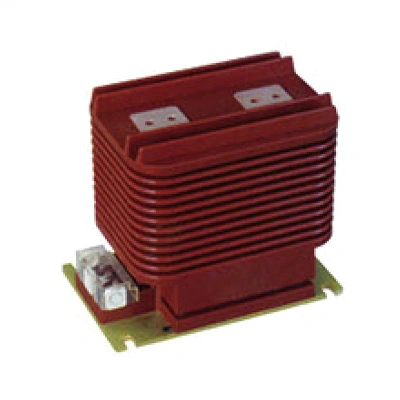
A common mistake is reusing a metering-class unit in a protection role when a new relay is retrofitted. The core is deliberately designed to saturate early to protect meters under fault conditions — exactly the opposite of what a protection relay needs. If you’re upgrading from electromechanical to microprocessor-based relays, it’s also worth checking whether the burden change alters the effective accuracy class. Modern numerical relays often present a much lower burden, which can actually push certain wound-type units into a higher-accuracy band — or reveal a previously hidden saturation problem at low currents.
Here, the difference between a smooth project and a drawn-out commissioning often lies in having access to detailed excitation and ratio test data right from the manufacturer.
Step 3: Don’t Let Physical Constraints Override Electrical Needs
The cleanest specification on paper can fail in the cable basement. Medium voltage switchgear from different eras or manufacturers imposes very different physical envelopes. A toroidal unit that slips over a bushing on one panel may simply not fit on another if the phase-to-phase spacing has been reduced for a compact design.
Pay equal attention to:
-
Primary conductor type: bar primary, wound primary, or window type. Bar-primary devices often provide better dynamic stability under short-circuit forces but may require extended busbar connections that disrupt the original type-test arrangement.
-
Secondary terminal box orientation: in retrofits, terminal boxes pointing the wrong way can force wiring bends that crack insulation over a decade of thermal cycling.
-
Environmental sealing: switchgear in tropical or coastal installations may need IP54 or higher terminal boxes even if the main enclosure is only IP4X, simply because condensation inside the low-voltage compartment is relentless.
I recall a service engineer who spent three hours shaving insulation off perfectly good control wiring because the terminal block on a replacement unit sat 30 mm lower than the original, and the pre-cut looms no longer reached. A quick dimensional check against the switchgear drawing would have prevented the delay entirely.
Step 4: Validate Against Real Grid Conditions, Not Just Nameplate Data
Switchgear ratings are a snapshot. The grid evolves. A feeder rated 1250 A today may carry 900 A but see prospective fault levels increase if a new transformer or generator connects nearby. That changes the X/R ratio, which changes the asymmetry of the fault current, which changes the required transient dimensioning factor for protection cores.
Standards give you the framework. IEEE C57.13 and IEC 61869 define the type tests, but they cannot foresee your specific network. Ask for:
-
Excitation curves measured at multiple taps, not just the full ratio.
-
Secondary winding resistance values, to calculate the actual lead burden yourself.
-
Short-time thermal current (Ith) ratings verified for the maximum clearing time of your backup protection, not just the primary protection.
When comparing options from different sources, having this data in a consistent format saves more time than endless spec-sheet comparisons. If you prefer to work from datasheets that already structure this information in a grid-code-ready layout, click here to see Fuyi’s detailed technical documentation and configuration options.
Common Oversights That Cause Commissioning Headaches
-
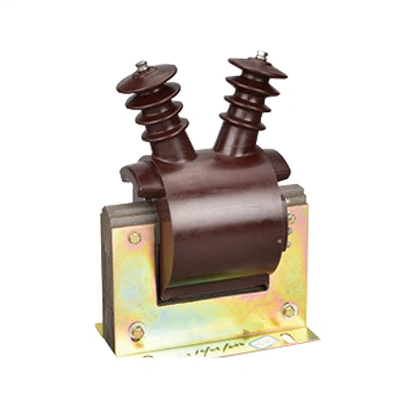
Interposing units with mismatched earth fault connections: In residual earth fault schemes, three units share a common secondary connection. If one unit has a slightly different magnetizing characteristic, the residual current during a healthy three-phase start-up can be enough to false-trip. Always match not just the ratio but the batch and core characteristics for the three units in a residual connection.
-
Voltage factor for unearthed or resonant-earthed systems: A PT specified with a 1.2× continuous voltage factor will overheat in a system that can experience a single-phase-to-earth fault for hours. For isolated-neutral or Petersen-coil-grounded systems, you need 1.9× for at least 8 hours. Check your utility’s ground-fault philosophy before ordering.
-
Ferro-resonance in VT circuits: Open-delta connected voltage transformers with graded insulation can form a resonant circuit with cable capacitance. If the switchgear feeds an overhead line with sudden voltage recovery after a fault, ferro-resonance can destroy VT primary windings within seconds. Damping resistors or resistive burden units are cheap insurance.
Bringing It Together into a Repeatable Process
Over the years, I’ve settled on a five-line checklist that catches most misapplications before the order is placed:
-
Connected burden (including wiring) is between 25% and 100% of rated burden for metering units.
-
ALF or FS factor aligns with maximum through-fault current and relay type.
-
Physical dimensions verified against latest panel internal layout drawing.
-
Voltage factor (for PTs) matches system earthing arrangement and expected earth-fault duration.
-
Excitation curve and winding resistance data received and reviewed for protection applications.
If you work in a project environment where each of these checks needs to be traceable for internal quality gates, having a structured product specification that already aligns with both IEC and IEEE frameworks reduces the review effort considerably. For project teams who want to move from ad-hoc selection to a documented, repeatable process, visit Fuyi’s application-oriented product page here.
A well-chosen measurement or protection device quietly does its job for two decades. A poorly chosen one announces itself at the worst possible moment. Given how little extra engineering effort separates the two outcomes, it’s one of the highest-return investments you can make in a switchgear project.
Note: This article reflects common industry practice and standards as of 2026. Always consult the latest edition of IEC 61869, IEEE C57.13, or applicable local grid codes, and involve a qualified protection engineer for critical applications.


-Temperature-Controller-1.webp)