


 May 22,2026
Last summer, a food processing plant in the Midwest lost an entire production shift. The culprit wasn’t a supply chain snag or a software glitch — it was a single switchgear connection that had been slowly overheating for months. By the time the thermal alarm finally tripped, the busbar joint had oxidized to the point of failure, and the resulting arc flash damaged adjacent cubicles. The maintenance team had been following a “check it during annual shutdown” rule, unaware that their humid, lightly loaded environment demanded a much shorter inspection interval.
Situations like this raise an uncomfortable question: how often should you really be inspecting switchgear contacts for heat and corrosion? The answer isn’t a single number. It’s a rhythm you build by reading your equipment’s operating context — and the consequences of getting it wrong can range from nuisance tripping to catastrophic failure. Even with robust contact assemblies, regular inspection remains the linchpin of electrical reliability. Below, we break the question into actionable guidance grounded in field experience and industry standards.
Why Heat and Corrosion Deserve Equal Attention
Heat and corrosion are the twin enemies of any current-carrying joint. Heat accelerates oxidation, and oxide layers increase contact resistance, which in turn generates more heat — a classic runaway feedback loop. Corrosion, whether from humidity, airborne chemicals, or galvanic action between dissimilar metals, quietly eats away at the conductive surface area until the joint can no longer carry its rated current without excessive temperature rise.
What makes this particularly tricky in switchgear is that the worst damage often hides inside bolted bus connections, cable terminations, and the internal pivots of disconnect switches — places you can’t see without opening panels or using thermographic windows. By the time external indicators like discoloured insulation or a burnt smell appear, the internal degradation is usually advanced.
The Real Answer to “How Often?”
Industry references such as the NETA MTS (Maintenance Testing Specifications) and IEEE 1458 provide starting points, but the optimal interval depends on four factors that every facility should evaluate individually.
1. Operating environment
Switchgear installed in clean, climate-controlled electrical rooms ages far more slowly than equipment in outdoor substations or dusty manufacturing floors. For indoor, air-conditioned environments with stable humidity, an 18- to 24-month thermal inspection cycle may be sufficient. Outdoor or unheated spaces exposed to condensation, road salt, or industrial fallout often require quarterly or even monthly checks of critical connections. If your switchgear sits near cooling towers, wastewater treatment areas, or chemical processing lines, halve the typical interval — those airborne contaminants are corrosion catalysts.
2. Load profile and cycling frequency
Contacts that carry steady, moderate loads tend to degrade predictably. But equipment that experiences frequent thermal cycling — daily load swings, intermittent heavy motor starts, or parallel transformer switching — undergoes repeated expansion and contraction. This mechanical breathing gradually loosens bolted connections and wears down the contact surfaces of disconnect blades and their stationary counterparts. In such cases, thermographic surveys every 6 to 12 months are strongly recommended, along with occasional contact resistance measurements on critical feeders.
3. Equipment criticality and failure cost
A feeder that supplies a single non-essential pump can tolerate a longer inspection window than a main incoming breaker that, if it fails, blacks out an entire facility. NETA suggests that for “critical” assets — those impacting safety, production continuity, or regulatory compliance — thermographic inspections should be performed at least annually, and more frequently if environmental or loading conditions worsen. The cost of inspection is trivial compared to the cost of unplanned downtime: one hour of lost production in an automotive assembly plant can exceed the price of a full switchgear condition assessment ten times over.
4. Maintenance history and trend data
If past thermographic reports show a gradual but consistent temperature rise on a particular bolted joint, shorten the inspection cycle for that piece of equipment specifically. Good asset management software can flag such trends and automatically prompt more frequent checks. This condition-based approach is more intelligent — and ultimately safer — than rigid calendar-based intervals.
What a Proper Inspection Actually Covers
A “visual check” alone is inadequate. A thorough heat and corrosion inspection should include:
-
Infrared thermography under load: At least 40% of rated current should be flowing to produce a meaningful thermal gradient. Compare phase-to-phase temperatures and look for any deviation exceeding 10–15°C. Pay particular attention to bolted busbar joints, cable termination lugs, fuse clips, and the pivot points of disconnect switches.
-
Contact resistance testing (micro-ohmmeter): For critical bolted connections, a spot resistance reading compared against baseline data or manufacturer specifications reveals joint degradation long before heat becomes visible on a thermal imager. Values that drift upward by more than 50% from the initial commissioning data warrant corrective action.
-
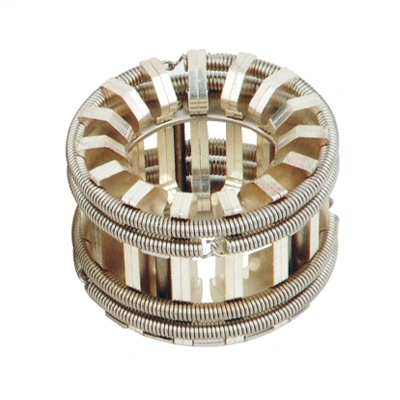
Physical examination of contact surfaces: When covers are removed, inspect both the fixed and moving contacts — where accessible — for pitting, discolouration, or a gritty oxide layer. Mild silver-oxide patina on silver-plated surfaces is normal and even conductive; crusty green or black corrosion on copper substrates is not. If you notice uneven wear on the fixed contact surface, it often signals misalignment or insufficient contact pressure that deserves immediate correction.
-
Torque verification on bolted connections: Loose hardware is one of the most common causes of overheating. Use a calibrated torque wrench and follow the manufacturer’s tightening values. Even a single under-torqued bolt can create a hot spot that degrades adjacent materials.
If you’re piecing together a maintenance kit or rebuilding aging cubicles, you might want to explore contact solutions with proven longevity to simplify future inspections.
Common Mistakes That Undermine Inspection Programs
Relying solely on infrared windows
IR windows are excellent for reducing arc-flash exposure, but they can’t show the backside of a bolted joint or the internal condition of a circuit breaker’s tulip-style disconnects. Complement thermography with physical spot-checks during planned outages.
Ignoring light-load conditions during thermography
A connection dissipating heat according to I²R losses may look innocuous on a thermal camera if the circuit is only carrying 10% of its rated current. Always record the load at the time of inspection and normalize temperature readings to full-load conditions when comparing data over time.
Treating all connections as equal
Not all contacts age the same way. Main bus joints, tie-breaker connections, and transfer-switch mechanisms often deserve a tighter inspection interval than outgoing feeder cable lugs simply because they see more cumulative thermal stress and have a larger blast radius if they fail.
Forgetting environmental seals and gaskets
Heat and corrosion issues frequently begin with failed enclosure door gaskets, missing drip shields, or open conduit entries that allow moisture and dirt ingress. Addressing these sealing problems is often more effective than polishing tarnished busbars — and it prevents recurrence.
Building a Sustainable Inspection Rhythm
Rather than picking an arbitrary number of months, build your schedule on a two-tier logic:
-
Base tier (all switchgear): Annual thermographic survey for indoor equipment, semi-annual for outdoor or harsh environments. Add a physical inspection of a representative sample of bolted connections every 2-3 years during a maintenance outage.
-
Enhanced tier (high-criticality or historically problematic equipment): Quarterly or semi-annual thermography, with annual contact resistance measurements and torque checks. Feed inspection results into your CMMS to adjust intervals dynamically.
This risk-based approach aligns with the principles of NFPA 70B (Recommended Practice for Electrical Equipment Maintenance) and keeps inspection effort proportional to actual need. For facilities that want to reduce the frequency of corrective work, investing in high-quality electrical contacts designed for harsh environments can directly extend the safe operating window between inspections.
When Inspection Reveals a Deeper Problem
Sometimes, inspection findings point to a component that has reached the end of its service life. Contacts with deep pitting, severely worn silver plating, or mechanical deformation from repeated arcing can’t be restored by cleaning and re-torquing alone. In those cases, replacing the degraded parts with properly rated, dimensionally compatible components restores the joint’s current-carrying capacity and restores the switchgear to its original performance envelope.
If you’re evaluating replacement options and want assemblies that maintain stable contact resistance over thousands of operations, feel free to take a look at Fuyi’s range of switchgear contacts. A well-engineered contact, matched to its operating environment, is the quiet foundation of every reliable inspection cycle.
Disclaimer: This article provides general maintenance guidance. Always follow your equipment manufacturer’s instructions, local codes, and relevant safety standards. Thermographic and contact resistance testing should be performed by qualified personnel using appropriate PPE and arc-flash precautions.


-Temperature-Controller-1.webp)