


 Aug 04,2026
A protection relay that trips without a detectable fault on the primary circuit is a frustrating but not uncommon challenge in medium-voltage systems. In most cases, the root cause lies not in the main power equipment but in the protection system itself—its control wiring, sensors, auxiliary power supply, or environmental conditions within the switchgear enclosure. This article breaks down the most frequent causes and provides a structured approach to identifying them, helping maintenance teams restore reliable operation efficiently.
Understanding the Protection Chain
When a circuit breaker opens, it’s natural to assume a short circuit or overload occurred. However, a protection relay only acts on the signals it receives. If these signals are corrupted, the relay may trip even when the primary circuit is healthy. The protection chain includes:
-
Instrument transformers (CTs and VTs) providing scaled-down current and voltage signals
-
Secondary wiring carrying these signals to the relay
-
The protection relay itself, processing inputs according to its settings
-
Auxiliary DC supply powering the relay and trip coil
-
The circuit breaker trip circuit
A problem anywhere in this chain can produce a false trip command.
External Factors Masquerading as Faults
Not all nuisance trips originate inside the switchgear. External events can cause transient conditions that a sensitive relay interprets as a fault:
-
Voltage dips from the utility grid. A brief sag on the incoming supply can cause an undervoltage relay to operate, especially if settings are too tight or a time delay is insufficient.
-
Switching transients from nearby capacitor banks. These can inject high-frequency noise into the VT secondary circuit, confusing relays that are sensitive to waveform distortion.
-
Starting large motors on the same bus. The inrush current may momentarily exceed a protection threshold if the relay’s time-overcurrent curve was not coordinated with the motor’s starting characteristics.
In these cases, the solution often lies in adjusting relay settings or improving coordination, rather than replacing hardware.
Common Control Circuit Issues
Control wiring problems are among the most frequent culprits behind unexplained trips.
Loose or corroded terminals: A single loose connection on a VT secondary terminal creates intermittent high resistance. The resulting voltage drop can appear to the relay as an undervoltage condition, triggering a trip. This is particularly difficult to diagnose because the problem may only appear under vibration or thermal cycling.
Insulation degradation in secondary wiring: Over time, insulation on control wires inside the switchgear can become brittle, especially if the enclosure is subject to temperature extremes. A partial short between conductors can inject false signals into the relay’s input terminals.
Ground faults on the DC control bus: If the DC supply powering the protection relay develops a ground fault on one pole, the floating voltage reference shifts. This can cause the relay’s internal power supply monitoring circuit to momentarily drop out, which some relays interpret as a trip command for fail-safe operation.
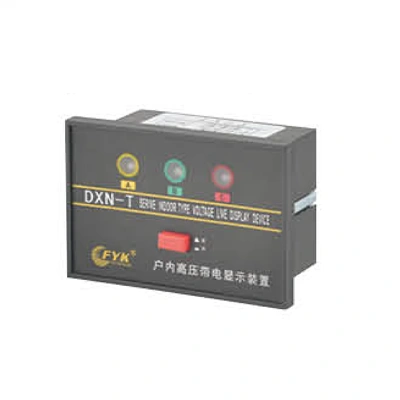
For more details on devices that help monitor these conditions, see the switchgear protection devices available for monitoring and indication applications.
Environmental Factors Inside the Switchgear
The operating environment within the enclosure directly affects the reliability of protection electronics.
Condensation and moisture: High humidity inside a switchgear cabinet can lead to condensation on relay terminals and PCB surfaces. This creates unintended conductive paths. Even a small leakage current between terminals can alter the voltage or current signal the relay receives.
Excessive heat: Protection relays, like all electronic devices, have specified operating temperature ranges. If a switchgear enclosure lacks proper thermal management and the internal temperature exceeds this range, relay accuracy drifts. In extreme cases, internal components overheat and trigger a watchdog reset or spurious trip.
Temperature and humidity controllers play a key role in preventing these conditions. Review how intelligent temperature and humidity controllers can maintain stable conditions inside enclosures.
-Condensation-&-Temperature-Controlle-803.webp)
Sensor and Measuring Circuit Malfunctions
The relay only knows what its sensors tell it. Faulty sensors produce plausible but incorrect data.
VT secondary fuse blowing: If a voltage transformer secondary fuse blows (or a miniature circuit breaker opens), the relay sees zero voltage. An undervoltage element, if enabled, will trip immediately.
CT secondary open circuit: While an open CT secondary is a serious safety hazard in itself, some relays may detect the resulting signal distortion as a fault condition and issue a trip command.
Live display indicator malfunction: While the live-line indicator itself does not directly trip the breaker, it provides critical safety verification for operators. A faulty indicator displaying a false energized or de-energized status can lead to incorrect manual intervention. If its associated interlock relay malfunctions, it could unexpectedly interrupt the closing circuit, though this is distinct from a relay-initiated trip. Understanding how a high-voltage live display indicator works helps distinguish sensor issues from real voltage presence.
Relay Settings and Coordination Errors
Sometimes the relay is doing exactly what it was told to do—the settings are simply inappropriate for the application.
Overly sensitive pickup settings: A phase overcurrent element set at 105% of nominal load current leaves almost no margin for normal load fluctuations. Minor variations cause a trip.
Insufficient time delay: An undervoltage element with a zero-second delay will trip during every voltage dip, even those the system is designed to ride through.
Incorrect relay curve selection: Choosing a definite-time curve for an application with significant inrush currents will cause trips during equipment startup. A time-overcurrent curve with a longer time constant should be evaluated for such applications.
Troubleshooting Checklist
When facing an unexplained trip, proceed methodically:
-
Download and examine the relay event record. Confirm which element initiated the trip and note the recorded fault values.
-
Compare the recorded trip values against the actual load conditions at that time. Are they plausible?
-
Visually inspect all VT and CT secondary terminal blocks for tightness and corrosion.
-
Check DC control bus voltage levels and verify there are no ground faults.
-
Measure the internal temperature and humidity of the switchgear enclosure. Does it fall within the relay manufacturer’s specified range?
-
Inspect VT secondary fuses or miniature circuit breakers for integrity.
-
Review the relay’s setting file against the system’s current operational parameters. Have load levels or system configurations changed since the relay was last commissioned?
-
Check for nearby switching events (capacitor banks, large motors) that coincide with the trip timestamp.
This methodical approach helps distinguish between a true system anomaly and a protection chain issue.
Frequently Asked Questions
Can a faulty auxiliary relay cause the main protection relay to trip?
Yes. If an auxiliary relay (e.g., a tripping or lockout relay) has a mechanical defect or contaminated contact, it can inadvertently complete the trip circuit, causing the breaker to open. The main protection relay records would show no trip initiation.
Why does my relay trip only during heavy rain or high humidity?
This strongly suggests moisture ingress in the switchgear or condensation on control terminals. Insulation resistance drops in humid conditions, allowing leakage currents that distort measured signals. Improving enclosure sealing and installing a smart dehumidifier may resolve the issue.
How do I know if the trip was from a real fault or a false signal?
Start by correlating the relay’s fault record with data from other sources: SCADA logs from upstream and downstream devices, disturbance recorders, and operator observations. If only one relay saw the “fault” and all other system parameters were normal, suspect a false signal. If multiple relays on different feeders recorded an event, it’s likely a real system disturbance.
Is it possible for a live display indicator to cause a relay trip?
Generally, no. A standard live display indicator is a monitoring device and does not directly initiate trips. However, some models include an interlock output that can be wired into the closing circuit to prevent breaker closure when the line is energized. If this interlock relay malfunctions, it could affect breaker control, but this is not the same as a protection trip.
When should I replace rather than repair a protection relay?
If the relay exhibits erratic behavior that cannot be attributed to external factors (wiring, sensors, environmental) after thorough testing, it may have an internal component failure. Relays over 15-20 years old may also have components nearing the end of their service life. Technical support should be consulted to confirm whether repair or replacement is appropriate.
Protection System Integrity Matters
A false trip is rarely random. It follows a logical cause—from a loose terminal screw to a moisture-laden enclosure to an over-tight relay setting. The key is isolating the root cause systematically rather than clearing the flag and hoping it won’t recur.
Ensuring the health of every component in the protection chain—relays, sensors, wiring, and environmental controls—is essential for reliable switchgear operation. Reviewing the available switchgear protection and monitoring devices can help identify potential upgrades or replacements that support system reliability.
For specific application questions or to discuss your switchgear component requirements, contact the technical team to review the specifications.


-Temperature-Controller-1.webp)